
 CALL FOR A QUOTE TODAY
Smart Storage & Space-Saving Solutions for Builders: Maximizing Small Work Areas with Milwaukee, Festool, & Makita Systems
A smaller work area can fill up pretty quickly once tools, materials, and the people completing the work all need room to move. You’ll still want everything close enough to reach when you need it, but having too much equipment in the area is likely going to leave the crew shifting boxes around just to get back to the task in front of them.
This is where smart tool storage for builders like you can make so much better use of the room you have available. With a more thoughtful way to store and transport your equipment, you can keep the tools you need nearby without letting them take over the area where the actual work needs to happen.
Let’s demonstrate how the right storage system can help you keep more of your workspace open without leaving essential tools out of reach.
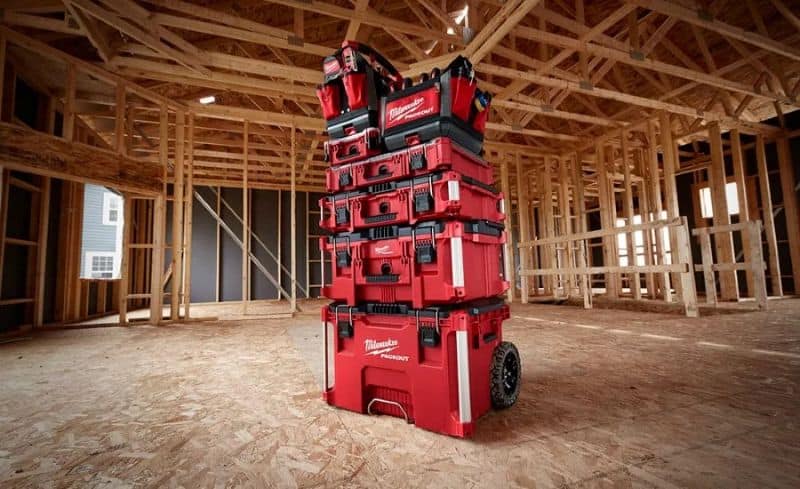
Challenges of Working in Limited Job Site Spaces
A smaller area gives the crew very little room for anything that doesn’t directly serve the work happening there. Toolboxes can block a doorway, materials may need to stay spread across the floor, and several trades could be moving through the same area at different points in the day.
Finished surfaces may also need to be protected as the project progresses. That makes it even more important to control how much equipment comes into the room and where it sits once it gets there.
Why Organization Impacts Productivity
Even the most useful tool on the job won’t do much for the crew if someone has to move three cases and search through two others to find it. All that extra handling can take someone away from the work several times throughout the day.
A more organized system keeps all your frequently used tools easier to reach and makes it much more obvious when something has been left elsewhere. The crew can then spend less time looking, unloading, and rearranging so much of what they brought inside.
Features of Modern Modular Storage Systems
Traditional toolboxes give builders a place to carry their equipment, but modular tool storage systems let them put together a collection around how they actually work. Boxes, drawers, small parts organizers, rolling bases, and other components can connect in several different combinations.
That flexibility gives you room to expand the system as your tool collection changes. It also lets you separate equipment into smaller working groups instead of loading everything into one oversized box that has to follow you everywhere.
Benefits of Milwaukee, Festool, and Makita Storage Solutions
Milwaukee, Festool, and Makita each approach modular storage a little differently. So before investing in a complete system, it’s going to be very beneficial to look at how you prefer to transport your tools and access them once you start getting your hands dirty.
Milwaukee PACKOUT™
Milwaukee PACKOUT™ includes rolling boxes, drawers, organizers, totes, racks, and mounting components that can connect across the broader system. Builders can create a mobile stack for the jobsite and use compatible mounting products inside a shop, trailer, or work vehicle. Drawer components also provide access without needing someone to remove every box that’s above them.
Festool Systainer³
Festool Systainer³ cases connect tool storage with the company’s carts, dust extractors, organizers, vehicle racks, and mobile-workshop products. Different generations of the Systainer are still compatible, giving Festool users a way to expand their storage without separating older cases from newer additions. Some components can even give you a stable surface for storage or certain working tasks.
Makita MAKTRAK™
Makita MAKTRAK™ uses a wider, horizontal design that gives builders room for larger tools and makes the cases easier to load into a truck bed. Dual-hinged lids provide access from either side, and builders can open connected boxes without dismantling the entire stack. The system includes rolling storage, several toolbox sizes, and organizers for those smaller tools and accessories.
Space-Saving Strategies for Builders
Effective space-saving tool storage uses the height of the system before it starts taking over the floor. And using stackable cases will keep several groups of hardware and tools within a single footprint. Plus, having drawers will preserve the access you have to the lower part of the stack.
You can also keep the immediate work area limited to what the current task actually requires. Any tools that are assigned to later phases can stay secured in the vehicle or staging area until the crew is ready to use them.
Organizing Tools by Trade and Project Phase
Organizing tools by trade gives each part of the work its own module. One case may hold layout tools, another can carry fastening equipment, and a divided organizer can keep all your hardware for a specific installation together.
You can narrow those groups even more as the project progresses. Once demolition and framing are complete, those tools no longer need to occupy the same room where the crew starts installing trim or completing all the final adjustments.
Creating Efficient Mobile Workstations
Your small workspace tool storage should give you and your crew access to what they need without unloading an entire vehicle beside the task. A rolling base can carry connected cases into the work area, and drawers or organizers can keep the things that are used a lot well within reach.
Some systems can also connect with carts or various work surfaces. But if you plan to use one that way, make sure the component is specifically designed to provide a stable working area before placing tools or materials on top of it.
Storage Mistakes That Slow Down Productivity
A large stack may hold plenty of equipment, but its capacity won’t help much if the tool you use most often is always buried at the bottom. So, try not to mix several unrelated trades inside the same undivided box either. The crew will have to search through equipment they don’t need for the current task, and smaller accessories can easily settle beneath larger tools.
Best Practices for Maintaining Organized Work Areas
Learning how to save space with tool storage has as much to do with maintaining the system as arranging it the first time. Be sure to put tools back into their assigned compartments, restock fasteners and accessories, and remove equipment related to the phases that have already been completed. You can also use labels that are easy to read as the entire collection grows.
It may be worth checking all the wheels, handles, latches, and connecting points every now and then, so a damaged component doesn’t make the complete stack harder to move or secure.
Build Your Modular Storage System at rk MILES
A modular storage system is going to become part of how you load your vehicle, move equipment into the jobsite, and reach the tools you use every day. So, before you start building out an entire collection, you’ll want to see how the boxes connect, where they open, and whether they’ll comfortably hold the equipment you plan to carry.
Here at rk MILES, we carry tools and storage products from Milwaukee, Festool, and Makita at participating locations. Our team can help you compare the available cases, drawers, organizers, and rolling components around the way you actually work.
Let’s discuss the storage needs of the tools you need to organize. Visit your nearest rk MILES location to start building your modular storage system today.
Tool Storage Systems – Frequently Asked Questions
What Are the Benefits of Modular Tool Storage?
Modular storage lets you connect different boxes, drawers, organizers, and rolling components around the equipment you carry. You can expand the collection over time and rearrange it as your work changes without replacing the complete system.
Can Organized Storage Improve Jobsite Safety?
It certainly can help. Keeping tools, cases, cords, and loose accessories out of walking areas gives the crew fewer obstructions to move around. Organized storage also makes it easier to secure equipment when no one is using it.
Can Stackable Systems Handle Large Projects?
Absolutely. Builders can use multiple stacks or modules for different trades, crews, work areas, or project phases. Just make sure the system provides enough capacity for the equipment involved and still gives the crew practical access to the tools they use most.
How Should Builders Choose a Storage System?
Start with the tools you carry and how you move them between your shop, vehicle, and jobsite. Look at case dimensions, weight capacity, wheel design, opening direction, and access to lower components. You’ll also want enough compatible options to expand the system later.