
 CALL FOR A QUOTE TODAY
Understanding Residential Energy Codes: How Standards Like RBES Impact Material Choices
A home can look complete from the outside, well before you actually know how well it’ll hold onto the heat inside. That distinct part of the work is determined behind the finished walls, where insulation, air sealing, windows, doors, and other components all have to perform together.
It’s residential energy codes that establish the minimum requirements for that performance. These standards influence how a home is designed, which products belong in each part of the building, and how the crew will need to install them.
So, whether you’re building a new house or making substantial improvements to an existing one, it helps to know how those requirements are going to enter the project. Let’s take an in-depth look at residential energy codes and how they’ll help guide some of the material choices you make along the way.
What Are Residential Energy Codes?
Residential energy codes establish how efficiently a new or renovated home needs to use energy. They address the parts of the house that separate the conditioned interior from the weather outside, along with the systems that heat, cool, and ventilate the property.
Instead of treating insulation, windows, air sealing, and mechanical equipment as unrelated, energy codes account for them all around a definitive level of performance that the completed home needs to provide.
Understanding RBES and Similar Energy Standards
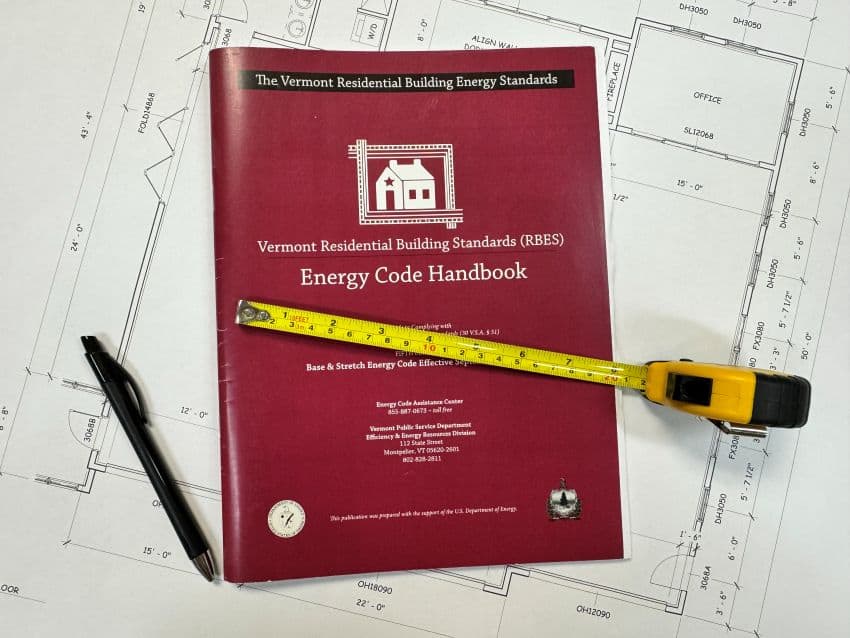
The energy standard used for a residential project comes from the state or local jurisdiction where the work takes place. For instance, Vermont uses its Residential Building Energy Standards, commonly known as RBES. Other parts of the country may follow a locally adopted version of the International Energy Conservation Code or another residential standard.
Although the exact provisions vary, building energy standards give everyone involved a defined set of measurable requirements for the home. Builders should confirm the applicable code and edition early enough to carry those details into the plans, product specifications, and construction process.
Why Builders & Homeowners Should Be Mindful of Energy Codes
Energy-code requirements have a big influence on residential construction projects well before the walls are framed and materials start to arrive. The plans may specify insulation values, window performance, air-sealing details, or equipment ratings that have a significant impact on the materials and systems used all throughout the home.
Reviewing those details early gives builders time to confirm the information for every product and work through any project-specific questions. It also helps homeowners understand why a particular wall assembly, window package, or insulation product belongs in their house.
Everyone can then work from the same plans without having to resolve an avoidable conflict after any materials come in.
Building Materials That Support Compliance
There are many things that make up an energy-efficient home, and each one handles their own respective part of the work across the structure. Some of the most important energy-efficient building materials include:
- Insulation – The correct type and installed thickness help the walls, floors, and ceilings resist heat moving through them.
- Windows and Exterior Doors – Documented ratings show how each complete unit handles heat transfer and air leakage.
- Sheathing and Continuous Insulation – These products can add thermal resistance and limit heat movement through framing.
- Air-Sealing Products – Tapes, membranes, and sealants help crews close seams, penetrations, and transitions throughout the building envelope.
How Material Selection & Energy Efficiency Are Related
A product’s energy rating tells you what it’s capable of, but the surrounding assembly still has to let it do that job. Which means that the quality of the installation is just as important in determining how much of that performance you’ll get from those materials.
Insulation can’t provide its intended value across a wall when there are gaps or compressed areas that leave parts of the cavity less protected. And even an efficient window will still need to properly fit the opening and connect well with the materials around it.
So, the material itself establishes the level of resistance a wall, roof, or opening can provide. And it’s the installation that fortifies that capability into the finished house, so the product and the work around it have to serve the same performance target.
Common Compliance Challenges
Plans can sometimes change after construction begins. A specified product may be unavailable, or the crew may uncover a condition that requires a different detail than was originally planned on paper. Those adjustments aren’t automatically going to be a problem, but someone still needs to check whether they affect the energy performance required for that part of the home.
If they do, the builder can review the new product or detail with the project designer before the crew continues. Keeping the updated specifications and manufacturer information available will also help verify that the finished work still meets the home energy code requirements.
Benefits Beyond Meeting Code Requirements
It may go without saying, but the primary purpose of meeting an energy code is so that the work done to satisfy it will continue serving the home well after the final inspection. So, for the homeowner, having effective insulation and air sealing will help prevent any unwanted drafts and keep everyone’s ideal indoor temperatures more consistent, especially near exterior walls and openings.
That also means the heating and cooling equipment will expend a lot less energy that those systems will need to operate efficiently throughout the year. Once those codes have been met, homeowners like you will have an energy-efficient home that’s easier to keep comfortable without using more energy than necessary to do it.
Future Trends in Residential Energy Standards
We are in such a technologically progressive era where advancements seem to not just develop quickly but also substantially improve upon what became before. That also means that residential energy standards will continue to advance alongside building science, product development, and the systems used to heat and cool modern homes. And any updated codes may likely place more emphasis on verified performance and how well the complete house uses energy after it’s constructed.
For builders, that may often mean they won’t be able to rely on specifications from a house they completed years earlier. They’ll of course need to reference the currently adopted standard for each new project so they can then bring those newer requirements into their work.
Build an Energy-Efficient Home With rk MILES
Energy-code requirements today eventually reach every insulated cavity, window opening, and sealed transition in a new home. So, when it’s time to source those products, it helps to have a supplier that understands why each material is there and what the finished house needs it to provide.
Here at rk MILES, we work closely with manufacturers and continually train our sales staff on the building materials used in today’s residential projects. Our team can help you explore insulation, sheathing, windows, doors, air-sealing products, and other materials that contribute to the performance established for your home.
Let’s start putting those energy-code details into place. Reach out to your nearest rk MILES location to talk with our team about the materials you’ll need for a more energy-efficient home.
Residential Energy Codes – Frequently Asked Questions
Who Is Required to Follow Residential Energy Codes?
This requirement comes down to where the home is located and the type of work being completed. New homes generally need to follow the residential energy code adopted in that jurisdiction. Additions, renovations, and repairs may have their own requirements for the areas being changed, so you’ll want to confirm what applies before the work begins.
How Can Builders Verify That Materials Comply?
Builders can compare the product information with the performance values and specifications written into the plans. Labels, technical data sheets, manufacturer instructions, and other product documentation can help confirm whether a particular material provides what that part of the home needs. Keep those records available for any reviews or inspections that happen during construction.
Do Energy Codes Differ for Renovation Projects?
They certainly can. A new home gives the project team the opportunity to address energy performance across the complete structure. Renovation may only involve certain walls, openings, rooms, or systems, so the requirements can follow the specific areas being changed. Check the locally adopted code before deciding which parts of the existing home will need to be updated.
What Role Does Insulation Play in Code Compliance?
Insulation helps slow down the heat that moves through the walls, ceilings, floors, and other areas separating the home from outdoor conditions. The plans will identify the value needed in each location, but the crew still has to install the material at the correct thickness and fill the intended space without gaps or excessive compression.