
 CALL FOR A QUOTE TODAY
Choosing Durable Lumber & Composite Materials for Long-Lasting Residential Exteriors
Choosing Durable Exterior Building Materials
The best exterior products are the ones that look good and continue to perform years later. For contractors and builders, every material choice matters. The lumber, siding, decking, and exterior products you install today are what homeowners will live with tomorrow. Choosing dependable materials helps protect your reputation and create homes built to last with little to no issues. At rk MILES, we help building professionals find quality exterior building materials that are made to balance appearance and durability.
Why Is Material Durability Important for Residential Exteriors?
Most exterior building materials are designed to meet minimum building code requirements, but meeting code and being truly durable are not the same thing. Sure, they may be durable enough to work, but the question is how well they’ll perform, how much maintenance they’ll require, and how long they’ll last before major repairs or replacement become necessary. For example, two siding products might both be approved for residential construction, but one may last 5-10 years before showing significant wear, and another may last 30-50 years with minimal maintenance. The difference often comes down to how the material performs under real-world conditions, such as:
- Moisture exposure
- Freeze-thaw cycles
- UV exposure
- Impact from hail, lawn equipment, or debris
- Insect activity
- Temperature fluctuations
What Types of Lumber Are Best for Outdoor Use?
When selecting long-lasting wood for exterior use, it’s important to consider how the material will handle moisture, temperature changes, and exposure to the elements. These are the most common choices:
Pressure Treated Lumber
Pressure-treated lumber is a common choice for outdoor construction because it has been treated with preservatives that help protect against rot, decay, and insects. It is often used for:
- Deck framing
- Outdoor structures
- Fencing
- Structural applications
- Ground-contact projects
Specialty Treated Wood Options
For projects requiring the authentic look and feel of real wood but needing extra protection against the elements, advanced treatment technologies offer excellent alternatives to traditional lumber.
- Thermally Modified Lumber – Products like ICON® by Timber Trading Group use a precise, chemical-free process involving only heat and pressure. This treatment reduces moisture and organic sugars at a cellular level, changing the wood’s structure to deliver Class 1 durability against rot, decay, and insects. It is exceptionally lightweight and offers outstanding dimensional stability with minimal warping or cupping, making it perfect for premium siding, trim, and decking.
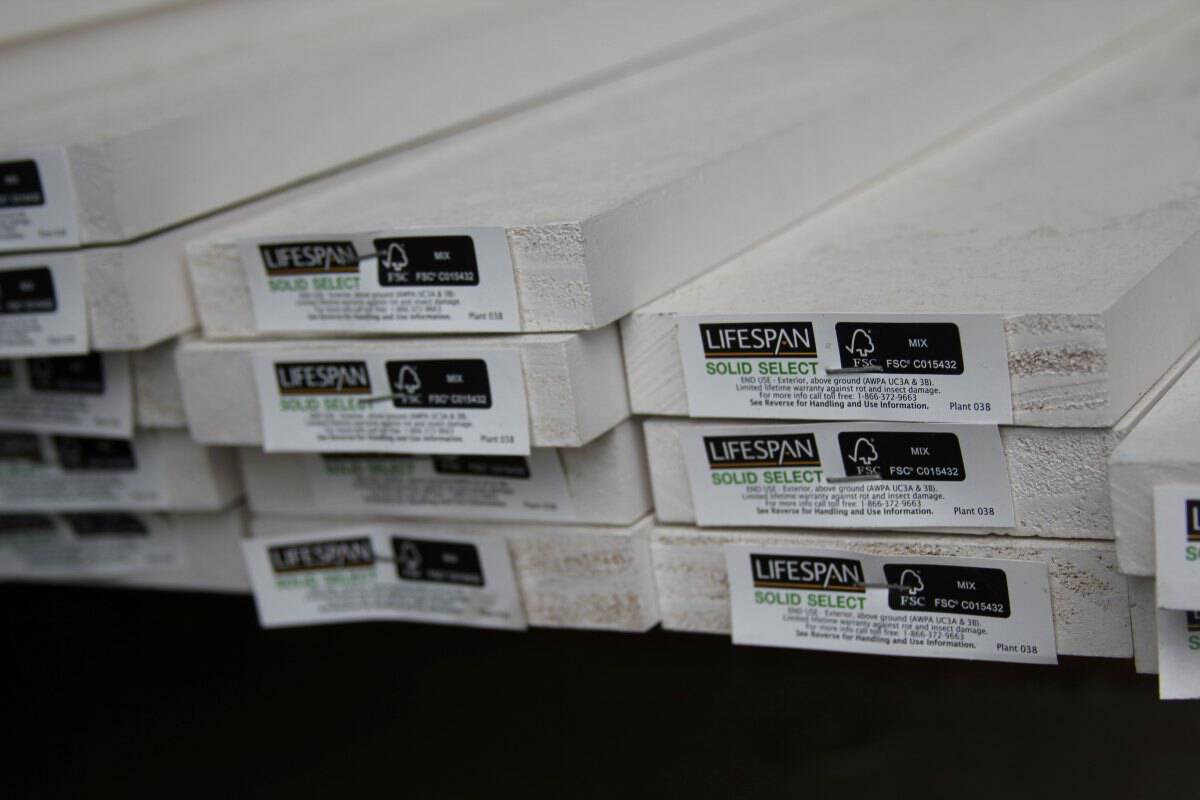
- Organic-Treated Radiata Pine – Brands like LIFESPAN® Solid Select provide high-grade, clear lumber sourced from sustainable radiata pine forests. Instead of harsh metallic chemicals, it is treated to the core with an EPA-approved organic preservative that safeguards against rot, fungal attacks, and termites. Finished with two factory-applied coats of alkyd primer, it yields a defect-free, smooth surface that is non-corrosive to fasteners and comes with a limited lifetime warranty.
Cedar and Other Natural Wood Options
Some homeowners and builders choose naturally durable wood species because of their appearance and ability to perform outdoors. It’s often used for siding, trim, outdoor living areas, and custom details. Cedar is a popular option for exterior projects because it offers:
- Natural resistance to decay
- A distinctive wood grain and appearance
- Stability through seasonal changes
- A timeless look
Specialty Exterior Lumber
Certain premium wood products can add a high-end look, but you have to be careful where you use them. Always consider how much exposure the material will face. IPE and mahogany are often good for exterior projects.
What Are Composite Materials and How Do They Compare to Wood?
Composite materials are engineered products designed to provide durability and consistent performance. Composite materials have become a popular alternative to traditional wood, especially for exterior projects. Made from a combination of materials designed for durability, composites are built to resist some of the common challenges wood can face outdoors.
Wood vs. Composite Materials: Which Is the Better Choice?
Wood and composite materials each have their place. It really depends on the project and the look you want. Wood remains a favorite for its natural character, versatility, and classic appearance. Common uses for wood exterior materials:
- Custom millwork details
- Traditional wood siding
- Exterior trim
- Projects where the natural wood look is preferred
Pressure-treated lumber is a reliable choice for many outdoor applications, including decks, framing, fencing, and other exterior projects and it typically has a lower upfront cost, but it may require more maintenance over time.
- Deck structures
- Framing and areas exposed to moisture
Composite materials, such as composite siding and decking products, are designed for durability and easier maintenance. They help resist moisture, rot, and insects while keeping a consistent look over time. They also usually have a higher initial cost but may save money in the long run because they often require less upkeep. Composite materials are often a great choice for:
- Deck surfaces
- Composite siding materials
- Exterior trim
- Railings
- Areas exposed to moisture
What Should Contractors Consider When Choosing Materials?
Contractors actually have a lot to consider when choosing the right materials for the job. They’ll need to think about:
- How Will the Material Handle the Environment? Exterior products need to handle everything the seasons bring. Moisture, freezing temperatures, humidity, and temperature swings can all affect how materials perform over time.
- What Does the Homeowner Want? Every homeowner has different priorities. Some want the natural look of wood and don’t mind regular maintenance. Others prefer a product that requires less upkeep. Helping homeowners understand those differences makes it easier to recommend materials they’ll feel good about long-term.
- Is the Product Built to Last? Not all products are made the same. Quality materials can make a difference in how an exterior looks and performs years after installation. Working with a knowledgeable supplier helps contractors choose products that meet the demands of the project, not just the minimum requirements.
- How Will the Materials Work Together? A home exterior includes many moving parts. Siding, trim, fasteners, flashing, windows, doors, and other components must work together to create a durable finished product.
Build With Materials That Are Made to Last
Choosing exterior materials is one of the most important decisions in any residential project. The right products help homes look better, perform better, and stay that way for years. At rk MILES, we work with contractors, builders, and homeowners to provide quality lumber, composite products, and exterior building materials backed by knowledgeable support. Need help choosing materials for your next project? Contact us today. We’re here to help you build with confidence.